
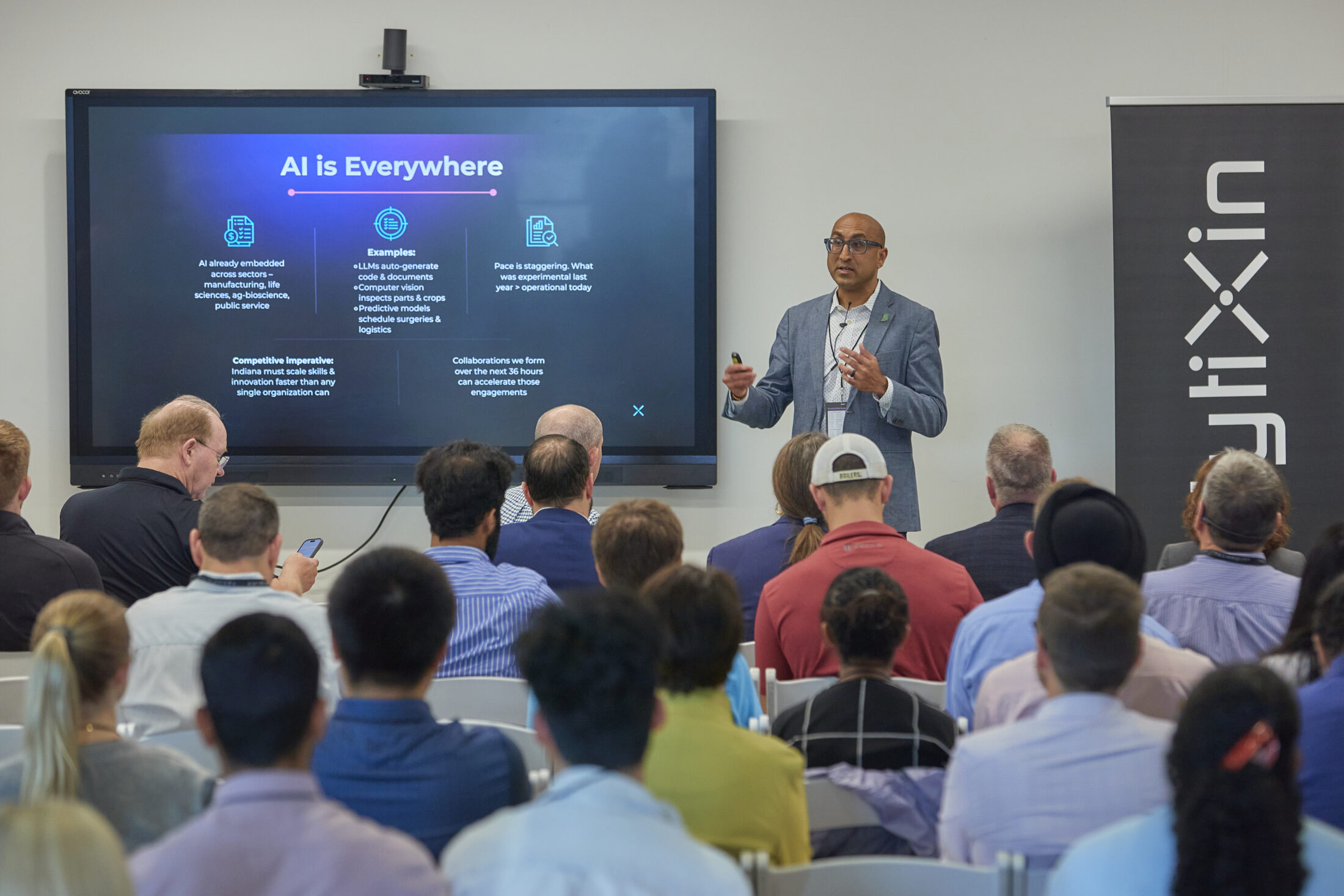
This August, AnalytiXIN—an initiative of CICP—hosted its second annual AnalytiXIN Summit. The organization’s flagship event, the summit connects academia with industry leaders to accelerate data-driven innovation and establish Indiana as a hub for artificial intelligence (AI) and advanced analytics.
This year’s summit doubled in size, bringing together innovators from across Indiana’s manufacturing, logistics, life sciences and tech sectors alongside faculty and students from Indiana University, Purdue University and the University of Notre Dame. Over two days of fast-paced collaboration, attendees learned from emerging voices in AI and rolled up their sleeves to address real-world data challenges. Some of the university-led resources include:
- IU Lab from Indiana University: A signature innovation initiative to translate academic research into real-world impact through IU’s expertise, startups and industry partnerships, anchored at the 16 Tech Innovation District.
- Institute for Physical AI from Purdue University: A program which leverages Purdue’s signature strengths in materials science, engineering, microelectronics, computer science, agriculture and life sciences to tackle the world’s toughest challenges.
- ManuFuture from Purdue University: A part of Purdue’s SMART Consortium, this program empowers U.S. manufacturers to increase resiliency and international competitiveness by successfully adopting privacy-preserving, scalable, certify-as-build AI/ML practices to erase the digital divide and accrue the benefit of economy-of-scale without centralization.
- iNDustry Labs from University of Notre Dame: A program dedicated to forming and fostering long-term partnerships with regional companies that drive innovation, economic resilience and real-world impact for both the region and the University.
Through the various breakout events during the summit, the AnalytixIN team along with the three involved universities covered challenges like the workforce gap, talent retention issues as well as numerous AI resources to address these challenges through a three-pronged approach of talent cultivation, fostering connections and creating an atmosphere of innovation enablement.
Faculty and student collaboration
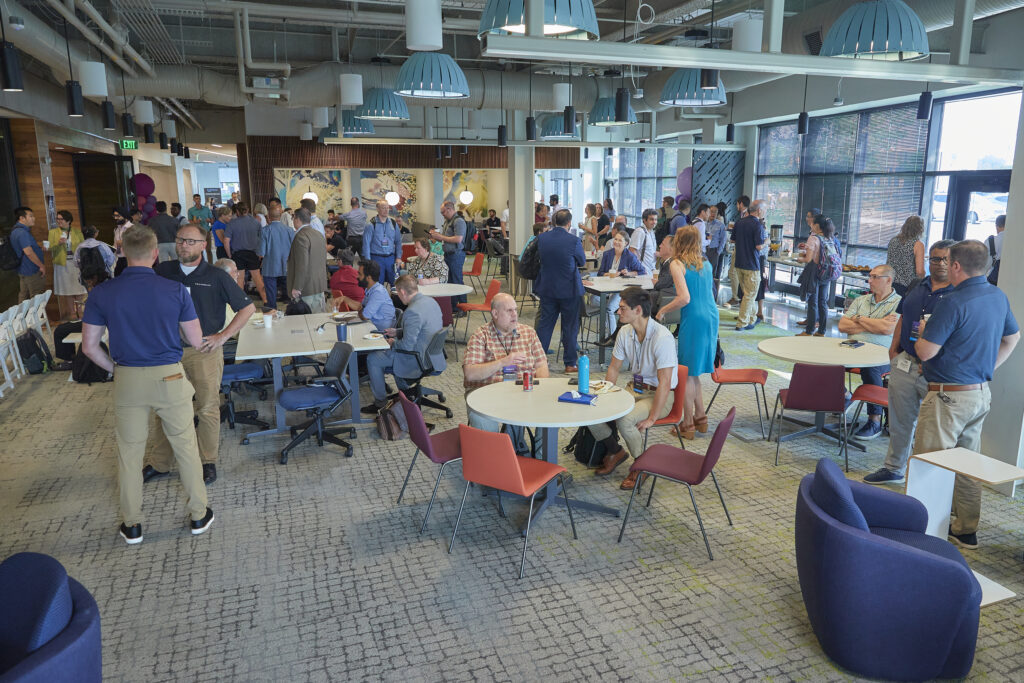
A hallmark of the AnalytiXIN Summit is cross-sector collaboration. Faculty and student teams from Indiana’s major research universities worked side by side with company representatives, applying research expertise and fresh perspectives to industry challenges. This collaboration reinforced the value of academia-industry partnerships in accelerating practical AI applications. Each company presented a challenge to their dedicated student-faculty team, who then developed a strategy to address and improve it.
“Technology adoption and workforce solutions are often discussed separately, but in reality, they are inseparable from the people who use them every day,” stated Sonya Snellenberger, Vice President of Partnerships at Conexus Indiana. “The Summit brings industry, academic, and student partners together to highlight how AI can be applied practically and ethically, while creating a level playing field for sharing real-world challenges. It shows the impact faculty and students can make through their unique expertise, while giving employers actionable strategies and new collaborators. The Summit sparks lasting relationships and opens the door to continued collaboration which is essential for Indiana’s economy in the age of AI.”
Industry representation and AI challenges
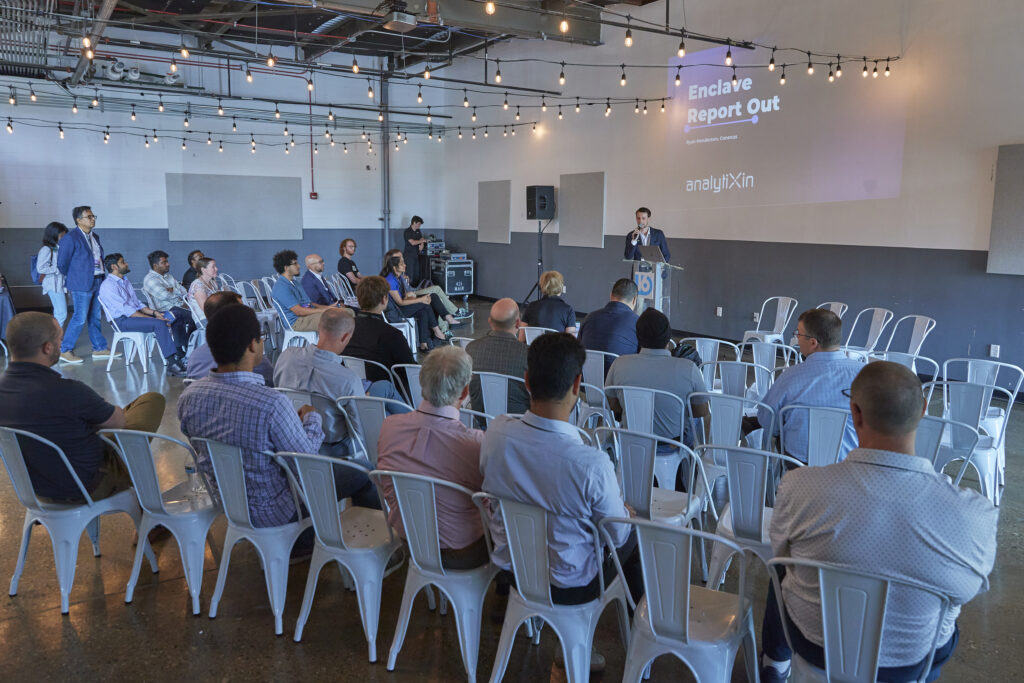
Manufacturers representing subsectors from automotive and transportation to advanced materials, industrial equipment, consumer products and medical devices, such as The Heritage Group, LDI Inc., Mach Medical, Kirby Risk Precision Machine, Wood-Mizer, Caterpillar, and Cummins, shared how they are exploring AI to strengthen competitiveness and productivity. Across these sectors, several common challenges emerged:
- Repetitive task automation: Many companies see potential in using AI-powered tools like agents or chatbots to handle repetitive, time-consuming processes. The promise is higher ROI, but success depends on high-quality, integrated data.
- Predictive analytics for reliability and process improvement: Increased visibility into equipment and production operations was a recurring theme, with companies looking to reduce equipment downtime, predict when a tool or machine may fail, and mitigate risks related to on-time product delivery.
- Data integration: Manufacturing data is often siloed and difficult to connect in meaningful ways—creating an opportunity for AI solutions to bridge the gap across different manufacturing systems and datasets.
- Customized AI tools: Customizable AI solutions are needed in a manufacturing environment with highly specialized equipment and software, presenting an opportunity for innovators and universities to co-develop them.
- Safety and compliance: Manufacturers noted opportunities for AI to support standardized data collection that can help companies make better decisions and improve compliance.
Shared Learnings and AI opportunities
The summit’s discussions highlighted both challenges and opportunities for manufacturers and logistics professionals looking to implement AI. Industry leaders emphasized AI’s enormous potential for enhancing manufacturing operations, but also spoke on the importance of gaining employee trust, ethical responsibilities and human oversight when working with the technology. The key learnings from the university partners led to some potential solutions, including:
- Utilizing AI agents for data collection and integration related to machines, advanced sensors, ERP systems and worker safety.
- Developing proprietary AI models and analytics that include data points like job routing, machine throughput, inventory levels and historical downtime to help predict and mitigate risks.
- Creating AI-augmented data visualizations for plant managers to give them better visibility into manufacturing operations.
- Developing an AI agent or chatbot to assist both customers and employees with identifying the correct replacement part during a troubleshooting and/or product warranty conversation.
What’s Next
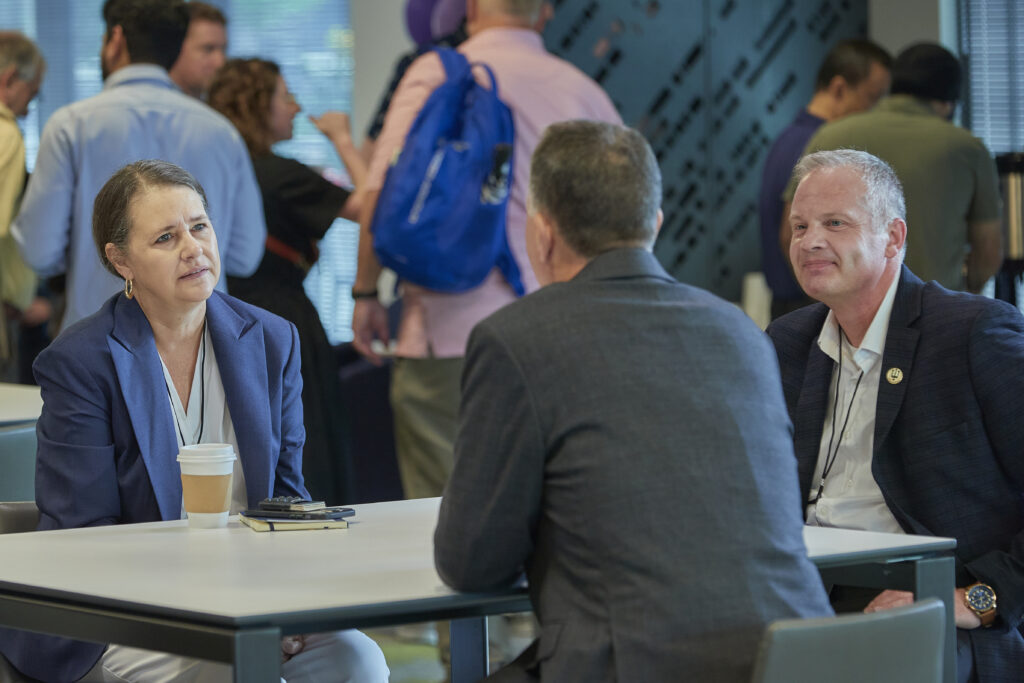
For Indiana manufacturers and logistics companies, the AnalytiXIN Summit underscored that the AI journey is not a one-size-fits-all process. Success will require collaboration, tailored solutions and continued investment in data infrastructure.
“The AnalytiXIN Summit showcased how Indiana can lead in AI innovation through strong collaboration between industry and academia,” said Josie Fostoldt, Director of Data at AnalytixIN. “Over the course of the event, industry leaders and university partners came together to explore real AI challenges and identify new opportunities for partnership. Conexus played a central role in this effort—bringing manufacturers to the table, guiding discussions, and ensuring that the perspectives of industry were front and center. Their leadership is helping to translate Summit conversations into concrete partnerships that will not only strengthen Indiana’s manufacturing sector but also advance the state’s broader AI innovation ecosystem.”
Conexus Indiana will continue supporting these efforts by creating opportunities for peer-to-peer learning, sharing practical resources and connecting industry with research expertise.