Turning corn waste into useful material produces a formula for success
FiberX
Key Stats
Lake
County
7
Company Size
$200,000
Manufacturing Readiness Grant Amount
From field to lab to production facility
FiberX found a niche with untapped potential by leveraging science to make products out of corn harvest waste products.
If you offer the world a product derived from Indiana corn, you’ll find a crowded marketplace. Countless companies market or sell corn-based products, from cornmeal, corn syrup, starches and animal feed to ethanol, alcohol and more.
Create a product from the waste that’s left over after that corn is harvested, though, and you’ll run into just one player: Lake County’s FiberX.
Founded in 2022, FiberX converts corn stover—the stalks, leaves, husks and cobs left in the field after corn is harvested—into fiber that the plastics industry can use to enhance injection-molded products. It’s a process that delivers benefits beyond one company’s bottom line: It serves the environment and human health by replacing petroleum-based materials used in plastics and reducing the amount of formaldehyde used in building products. It benefits farmers, their communities and state by producing revenue from material that, at best, has been revenue-neutral and can be a fiscal liability. Consumers get highly durable and environmentally beneficial products, and corporations get another route to pursuing their net-zero environmental impact goals.
With these pluses in mind, FiberX is harnessing opportunity from what it describes as the largest agricultural residue in the state and possibly the world. The key to what makes corn stover such a promising commodity is something called lignin, which is the natural polymer that lends structural strength to plants.
“Lignin is nature’s glue,” says FiberX President, CEO and co-founder Dave Skibinski. “In order for a plant to grow, its leaves and stalk need something to bind it all together, so it can grow towards the sun.”
The people at FiberX were not the first to see opportunity in lignin. Its potential has been pursued for some time, as researchers, entrepreneurs and corporations recognize that lignin could be used as a replacement for the petroleum-based polymers typically used in plastics—a major win at a time when consumers are increasingly resistant to buying petroleum-based plastics, petroleum prices are volatile and petroleum supply chains can be strained.
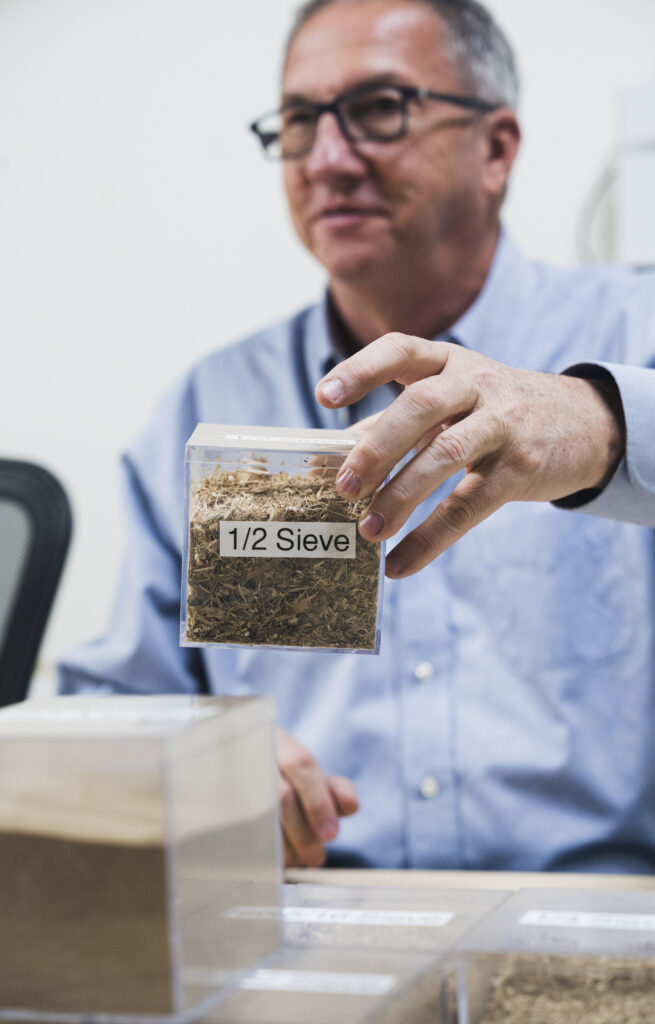
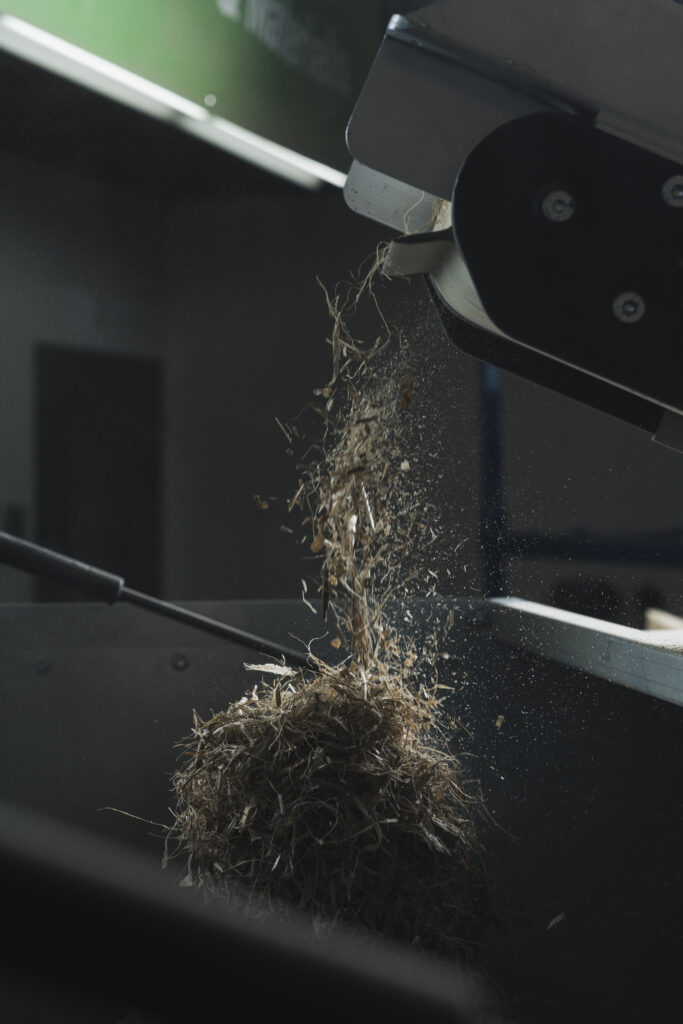
So why hasn’t this been done before? Because the process for drawing lignin out of plants is not so simple. In fact, the pursuit stymied scientists for decades until a few years ago, when Purdue University’s Dr. James Caruthers found the right combination of chemical reactions, novel processes and solvents to unlock the puzzle.
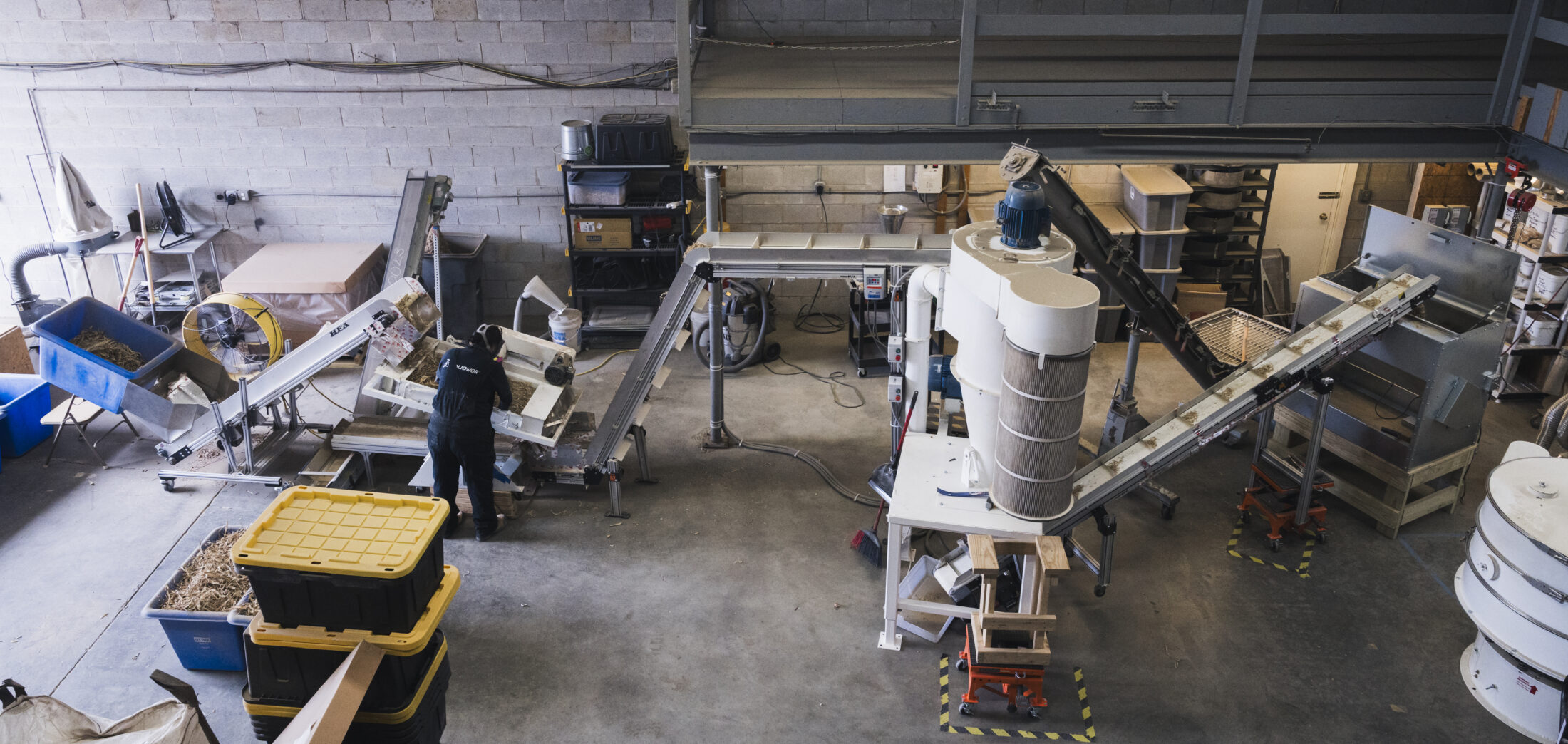
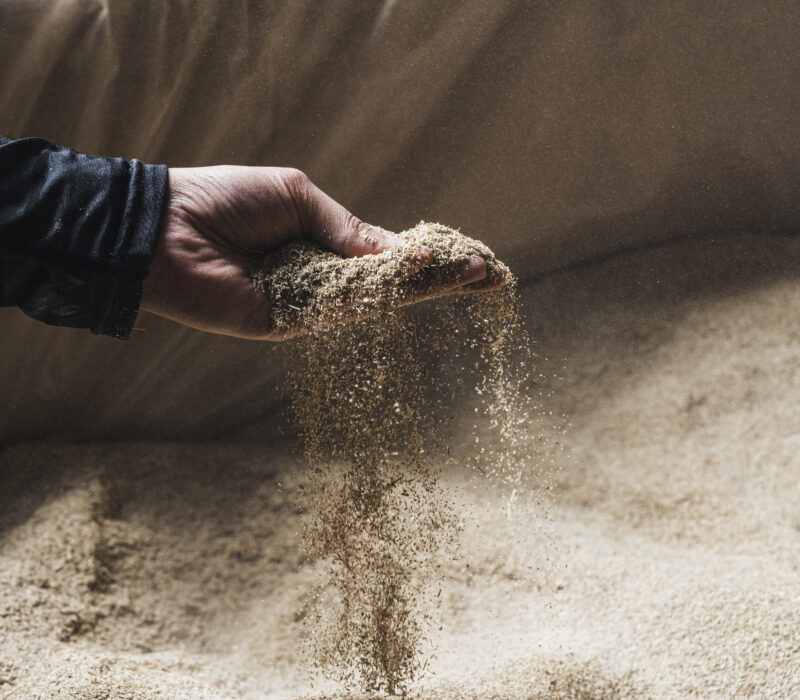
FiberX has been built on that discovery, forging a business out of refining lignin from corn stover and turning it into a fiber that can be used by manufacturers to create a range of products. The seven-person team makes this happen at a Lake County refining facility that’s so automated it can run with just two people on the production floor—a lever of efficiency Skibinski attributes in part to a Manufacturing Readiness Grant (MRG).
“This would not be here without the MRG program,” he says. “It literally enabled us to do this.”
Shaping a plan and accessing a catalyst
FiberX was founded on opportunities hiding in plain sight and a vision for a whole new industry. A Manufacturing Readiness Grant helped put machinery behind that vision.
Seeing opportunity sitting in cornfields is one thing; seizing that opportunity required FiberX to mix a lot of science with ingenuity and some heavy-duty equipment and technology. That’s where an MRG came in handy.
The FiberX process builds on three basic steps identified by Dr. Caruthers at Purdue:
- the preparation of stover
- the separation of lignin
- the preparation of products tailored to specific applications
Within these three basic steps is a series of highly technical steps with exacting tolerances. The corn stover must be filtered, processed and milled to precise specifications, chemical reactions must be encouraged and managed, and lignin must be drawn out. Chemical agents must be introduced to produce the resins for various applications. The materials and products must be moved between specialized manufacturing equipment from step to step.
In 2022, FiberX applied for and received an MRG to support the acquisition of equipment and technology to increase its production capacity and efficiency. The grant made it possible for the company to gather needed equipment at a reduced capital risk.
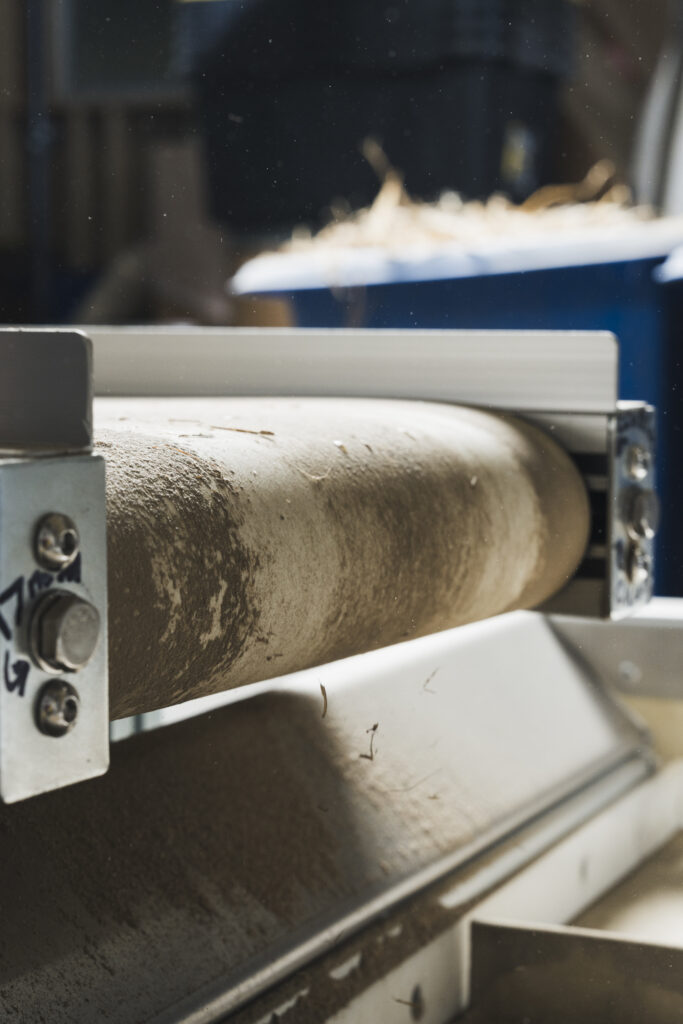
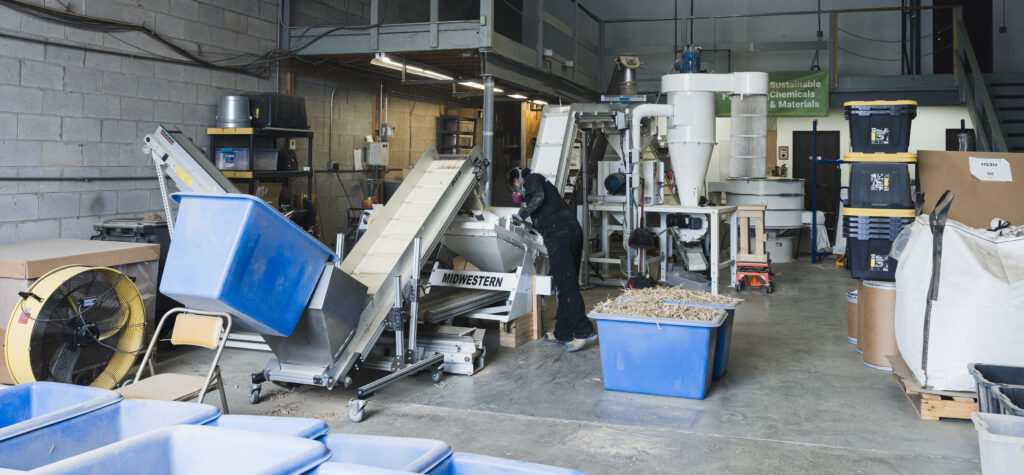
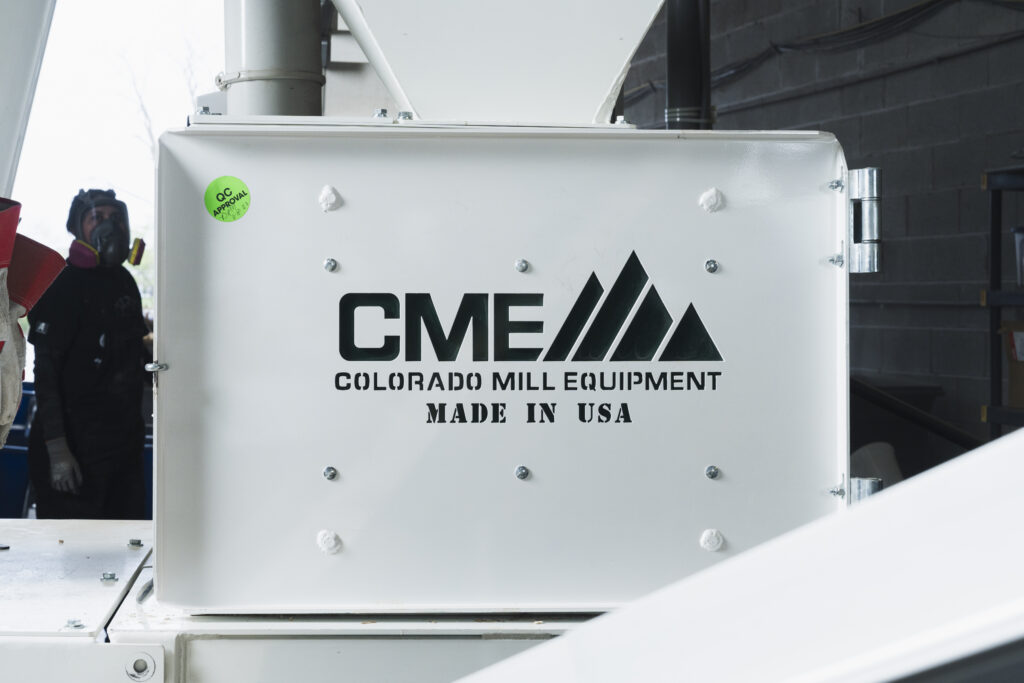
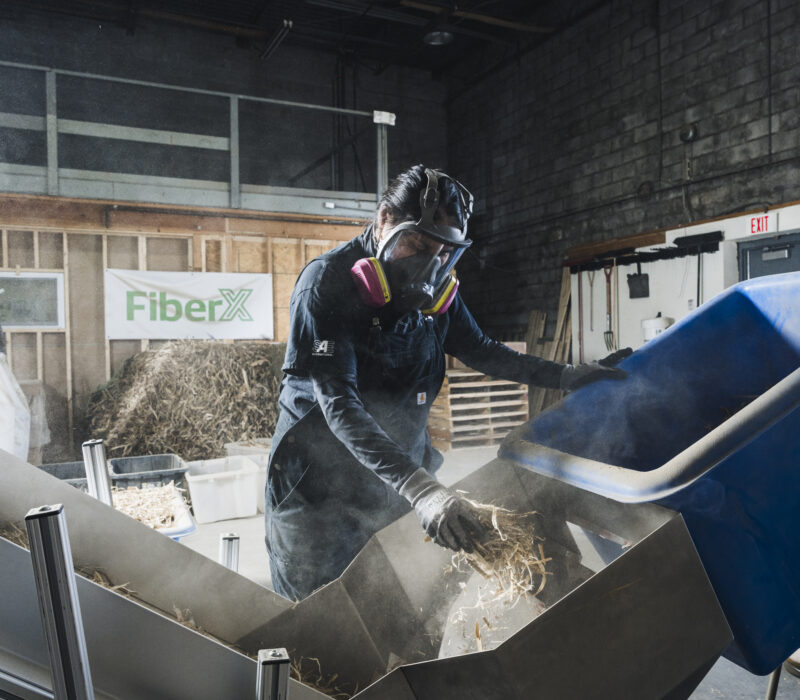
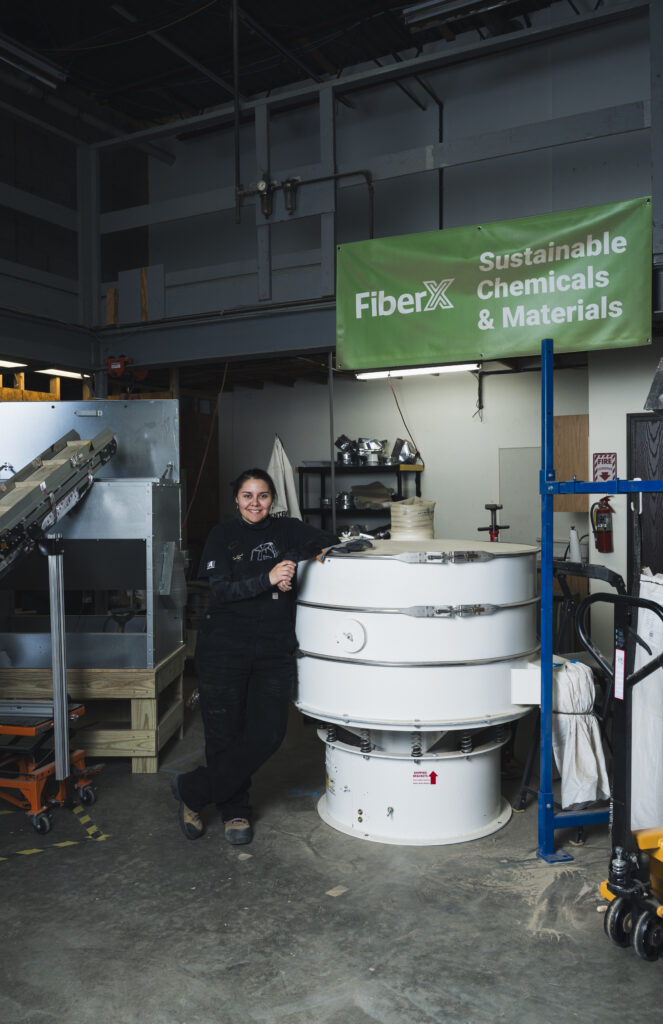
FiberX also helps to reduce capital risk by finding machinery that can do the work—even if it must use it in novel ways—rather than trying to engineer new equipment. The company employs vibrating screens used in the mining industry, for example, as well as conveyors, a hammermill with a built-in air-handling system, gyro separators that allow it to separate material down to the smallest particle size and other machines used in various industries. An automatic feeding system has allowed FiberX to eliminate a manual component of the process and increase efficiency exponentially, scaling from 50 pounds of material an hour to as much as 8,000 pounds per hour.
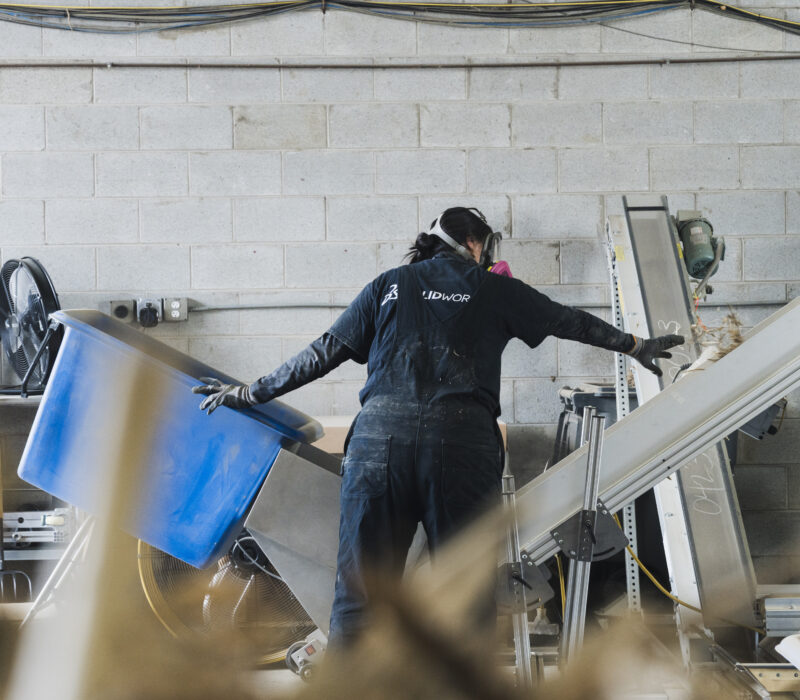
Pulling all this equipment together are a process and tools that allow the whole operation to be operated by two people: one to perform manual tasks and one to guide the process with smart technology.
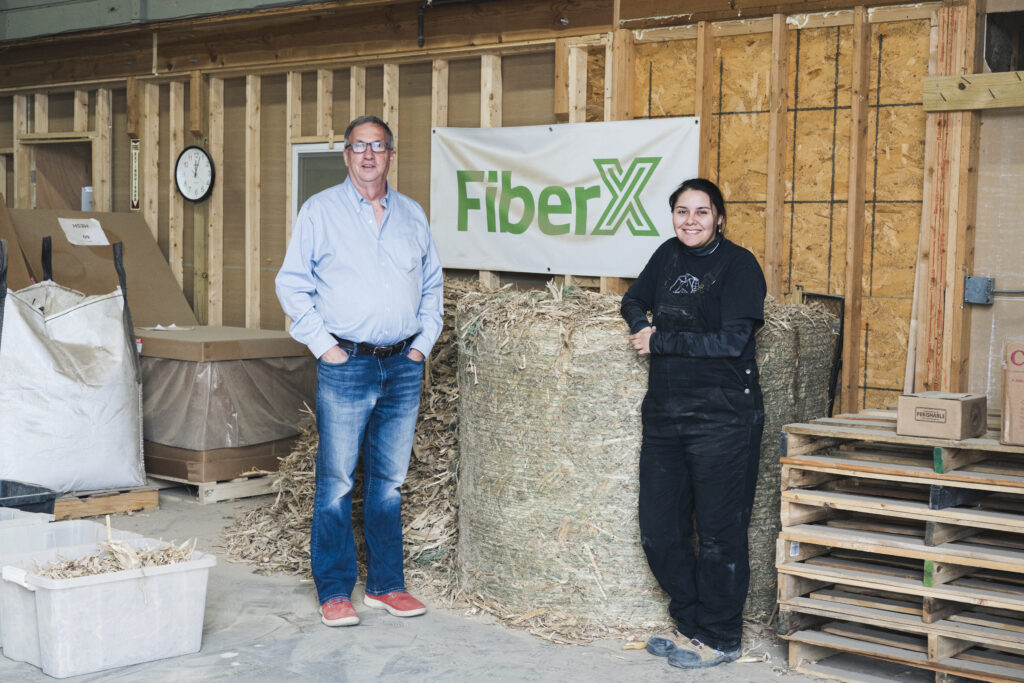
That’s not to say the operation is designed to employ only a few workers. On the contrary: FiberX is built on a vision of a network of plants located across the state, with each plant eventually employing as many as 35 people and drawing stover from about a 25-mile radius around the plant. “Wouldn’t it be great if in 10 counties across Indiana, we created 30 to 35 jobs?” Skibinski asks. “In modest communities that need some good jobs … A handful of jobs could stabilize a small community.” Now FiberX is working to find buyers for its product. It has shipped fibers to a number of companies who are investigating ways to put it to work “We’re probably now about 40 customers who’ve tested and are testing our product,” Skibinski says.
Key Learnings
Lessons learned from a basketball coaching legend and a management guru merge with real-life entrepreneurial experiences to drive FiberX’s vision.
Dave Skibinski had the opportunity to learn leadership and management lessons from two very different legends: one a hot-tempered, bigger-than-life hoops coach and the other a soft-spoken and humble management guru. He’s blended their lessons with some on-the-job experiences to forge a path forward for FiberX.
As a student at Indiana University, Skibinski served for four years as a manager for the basketball team under Hall of Fame coach Bob Knight. He found the experience so informative that he pulled together memories from other former managers for a 2015 book, “Lessons Learned at Knight School: Prepare to Win.” From the countless lessons, he points specifically to four that he uses to guide his leadership every day.
Set clear and reasonable expectations of performance. Players always knew what Knight wanted of them and, while he pushed them to be the best they could be, he tailored his expectations to each player’s strengths and abilities.
Provide people with adequate resources to do the job. Skibinski, an IU manager from 1976 to 1980, tells a story about the early days of videotape when Knight saw an opportunity to gather film on opponents. While other teams were still trying to figure out how to use the technology, Coach Knight equipped his managers with top-of-the-line Betamax recorders and editing machines so they could go to other cities, set up in hotel rooms and record the games from local TV stations.
Tell individuals how they’re going to be measured for their performance. Skibinski set performance standards for FiberX in part on the MRG program objectives. And, by those measures, he feels good about what his team has achieved. “I think if you were to do an audit of Fiber X against the goal of the program, I think we fulfilled it,” he says. “And I think that we’re ready to scale to the next level.”
Give everyone clear and timely feedback. Even in the most intense games with athletes who had been with the team for years, players coming off the floor almost always would get instruction from Coach Knight about what they could do better. He didn’t wait until later to give them feedback; they got it immediately.
Refresh your knowledge. After earning his MBA at University of Southern California, Skibinski took classes at Claremont Graduate University, where he studied under management guru Peter Drucker. Impressed by the way Drucker, who was then in his nineties, could hold court for four solid hours, Skibinski took many lessons from that course – but one that has especially stuck with him focused on the growth of the knowledge economy. “He said that, at a minimum, you need to refresh your knowledge every seven years,” Skibinski says. “And I would think that if we were to ask him that question today, if he were alive, he’d probably say closer to four or five years.”
See the gems around you. Early in the process of forming FiberX, when Skibinski was using space at Purdue University Northwest’s Commercialization and Manufacturing Excellence Center (CMEC) to develop what would become FiberX, he often interacted with a CMEC administrative assistant named Angela Perez. They spoke in the hallway, and she collected his mail when he was out of the office. When the time came to add to his staff, he asked a few Purdue folks he ran into at a conference in Las Vegas if they knew any likely candidates – someone with an engineering background, who is smart, innovative and hard-working. They asked him, “Don’t you know Angela?” “Of course I know Angela,” he answered. What he didn’t know is that Perez was a Purdue engineering grad with a thirst for learning. Filched (with permission) from the CMEC staff, Angela joined the FiberX team. Now the Conexus Rising 30 awardee serves as FiberX’s plant operator and engineer, and she recently added welding to her skillset so she could be an even greater asset to the company.
Keep a fire extinguisher handy. Sometimes, when you’re innovating, things will go wrong. One time when the FiberX team was learning how to process the corn stover, things got a little too hot. As a visual aid, Skibinski shows off a melted piece of equipment. “We burned it out,” Skibinski says. “It melted the metal … we continue to learn.” He was quick to add, “We have a fire extinguisher.”
Identify milestones and accomplish them. “You have to show that you’re accomplishing what you set out to do,” Skibinski says. “I’ve certainly learned that milestone achievement is the critical factor in funding success. Completing your milestones is what earns you the opportunity to get more money.”
“It’s good for the state. It’s good for the environment. I mean, everybody wins with this.”
Dave Skibinski
President, CEO and Co-founder at FiberX