
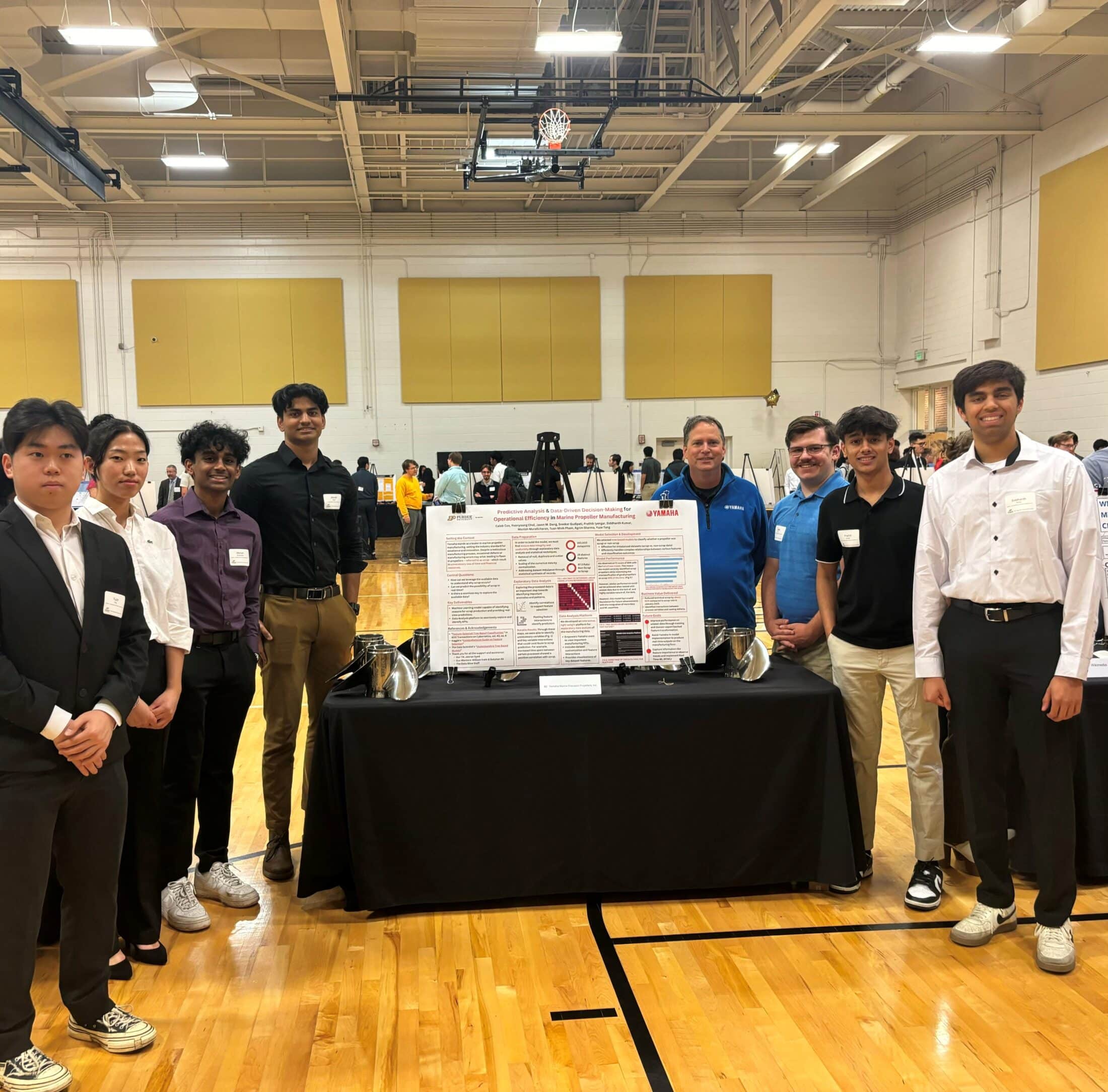
When Yamaha Marine Precision Propellers (YPPI) opened its new, fully automated foundry in 2021, the goal was clear: modernize a 1970s-era metal casting process to protect its most valuable investment … people.
The new foundry, located in Greenfield, Indiana, incorporates cutting-edge robotics and vision systems to improve safety and consistency in propeller casting.
“Automation was never about reducing headcount,” said Batuhan Ak, General Manager at YPPI. “We actually gained headcount with this facility. It was about safety, efficiency and giving our people the tools to do their jobs better.”
But soon after “flipping the switch,” the company faced an unexpected challenge. Its scrap rate—the percentage of defective parts—soared from 2% to over 15%.
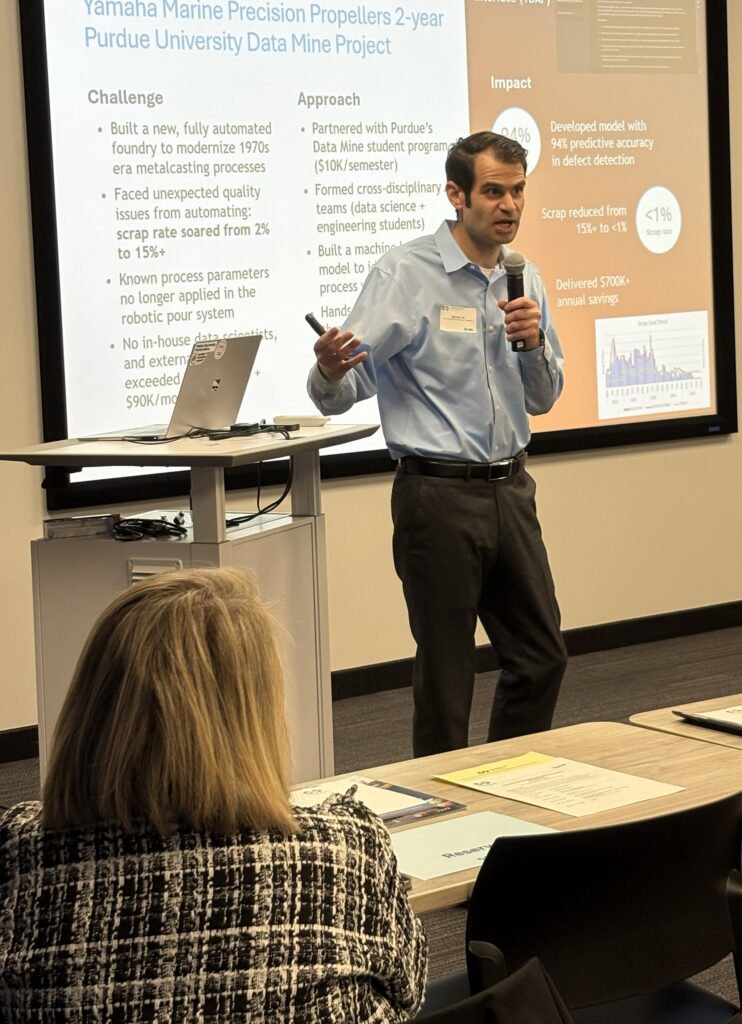
“We thought we took the human variable out of the equation,” Ak said. “But we didn’t account for the new variables created by automation.”
The robotic pouring process introduced new dynamics that traditional process parameters no longer captured. Despite collecting vast amounts of data from sensors and machines, YPPI lacked in-house data scientists to make sense of it all.
To solve the problem, Ak and the team looked outside of the organization, but external vendor quotes far exceeded the budget of YPPI, a 160-person company.
Partnering with education to solve the problem
That’s when YPPI turned to Purdue University’s Data Mine, a student-driven research and analytics program that connects Indiana companies with cross-disciplinary teams of data science and engineering students.
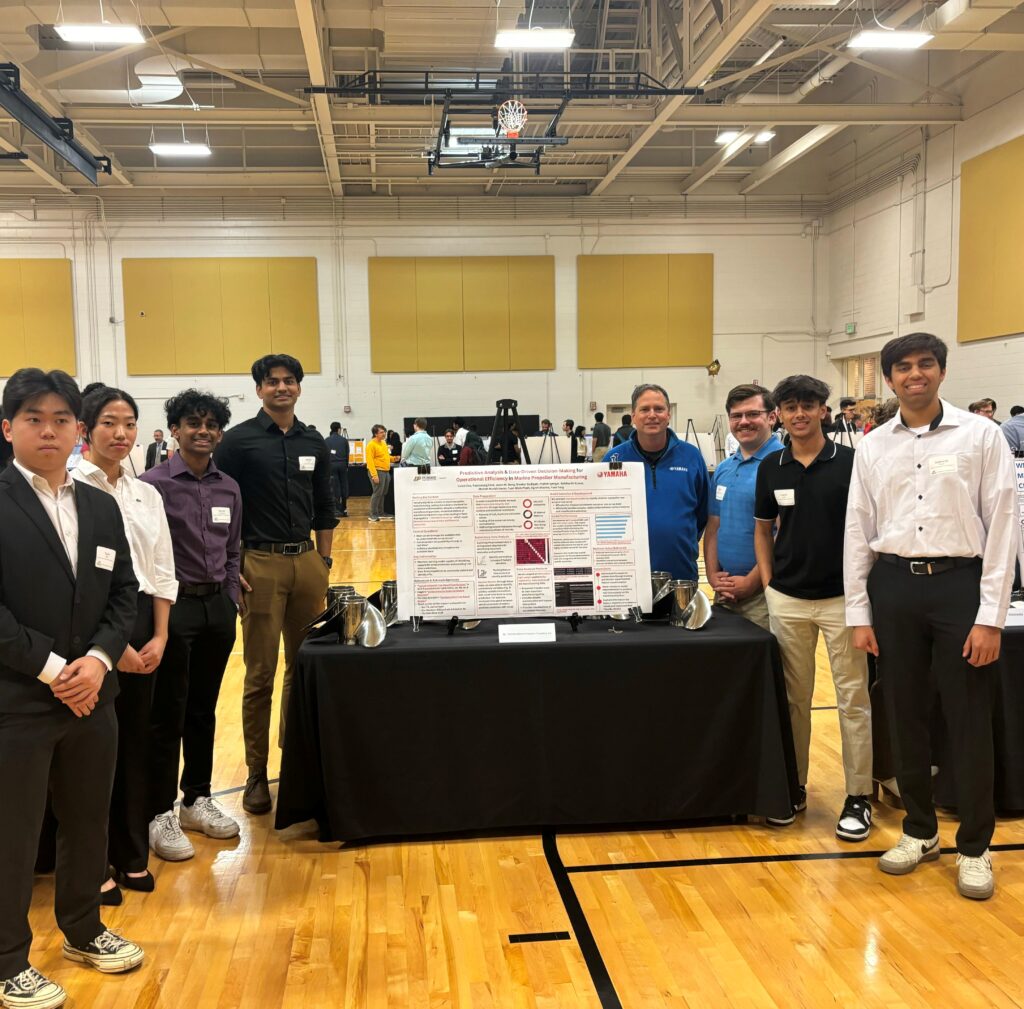
For a modest $10,000 per semester, Yamaha and the Data Mine launched a two-year collaboration to develop machine learning models capable of predicting “scrap” before it occurred.
“In the first year, our model had about 40% predictive accuracy,” Ak said. “But by cleaning and refining the data with Purdue’s team, we reached 94% predictive accuracy in detecting defects.”
That leap in accuracy translated directly into production gains. Yamaha’s scrap rate dropped from more than 15% to less than 1%, saving the company more than $700,000 annually.
Lessons in data and business integration
For Ak and his team, the experience underscored two powerful lessons: the importance of clean data and the need for engineers to stay involved in AI development.
“The cleanliness of the data was the most important lesson we learned,” Ak said. “And there has to be a functional understanding of the business in order to vet both the process during AI development and the AI’s output.”
Real ROI for SME manufacturers
YPPI’s total investment in this project, about $40,000 over two years, has resulted in millions in cost savings and safeguarded the future of its state-of-the-art facility.
“From a cost-savings standpoint, it’s been astronomical,” Ak said. “It’s possible the future of this new facility would have been in jeopardy if we hadn’t pursued this project.”
Now, the company is expanding its business, offering casting services to other manufacturers who need the same level of precision and quality the company has achieved through AI.
“I would be hard-pressed to think of any small or medium-sized business that wouldn’t benefit from some form of AI,” Ak added. “It’s even more valuable for companies our size.”
Yamaha’s story proves that advanced technology isn’t out of reach for small and mid-sized manufacturers. By partnering with Purdue’s Data Mine, YPPI gained access to world-class analytics expertise at an attainable cost—an example of how collaboration between industry and education can make digital transformation achievable for companies of any size.
Ak recently shared this AI journey with industry leaders at Conexus Indiana’s Q4 Advanced Industries Council meeting, hosted at SMC in Noblesville. If you’re interested in hearing more conversations like this and connecting with leaders who are navigating similar challenges and opportunities, we encourage you to explore the Conexus Advanced Industries Council.