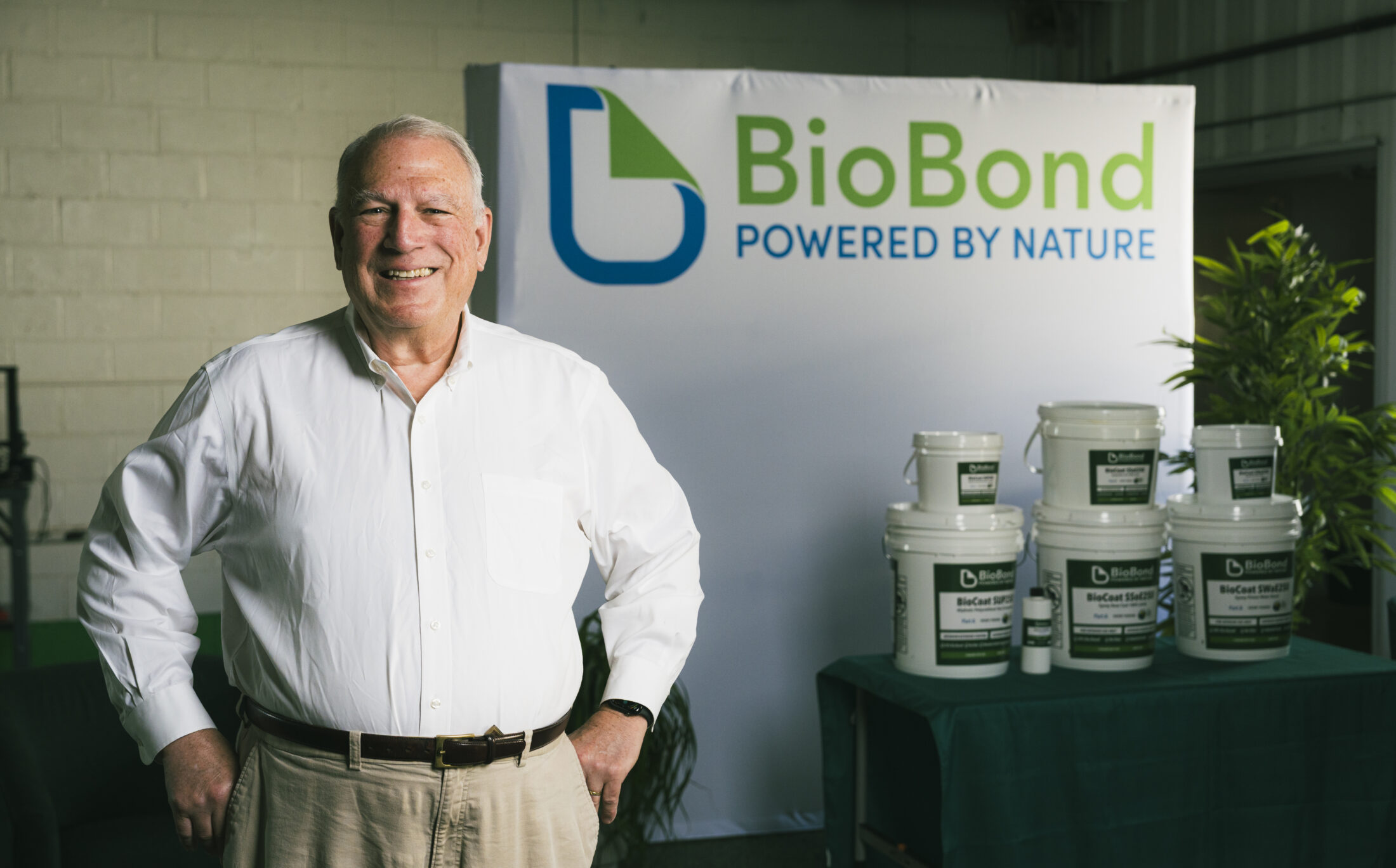
Ready funding, veteran leadership helps adhesives startup speed to market with plant-based products
BioBond
Key Stats
Tippecanoe
County
15
Company Size

Focus on innovation – not premium pricing – propels bio-products firm
Launched in September 2023, Tippecanoe County’s BioBond Adhesives has sped to market with a group of products that offers environmental benefits and a mission for adding jobs and economic activity in rural Indiana.
While grocery stores can get shoppers to pay more for bananas labeled “organic,” the team at BioBond Adhesives will assure you that a similar approach does not work when it comes to plant-based adhesives and coatings.
“You cannot fool yourself by going into these markets and thinking with biomaterials you can charge more. You cannot,” says BioBond Adhesives CEO Marc McConnaughey. “So many companies have failed in the Midwest because of that.”
BioBond Adhesives, on the other hand, aims to compete on performance and price with an innovative product that leads in its category. “If we cannot be less than the highest price in the market, we don’t do the product,” he says. “And if we’re not performing as well as the best product, we don’t do it.”
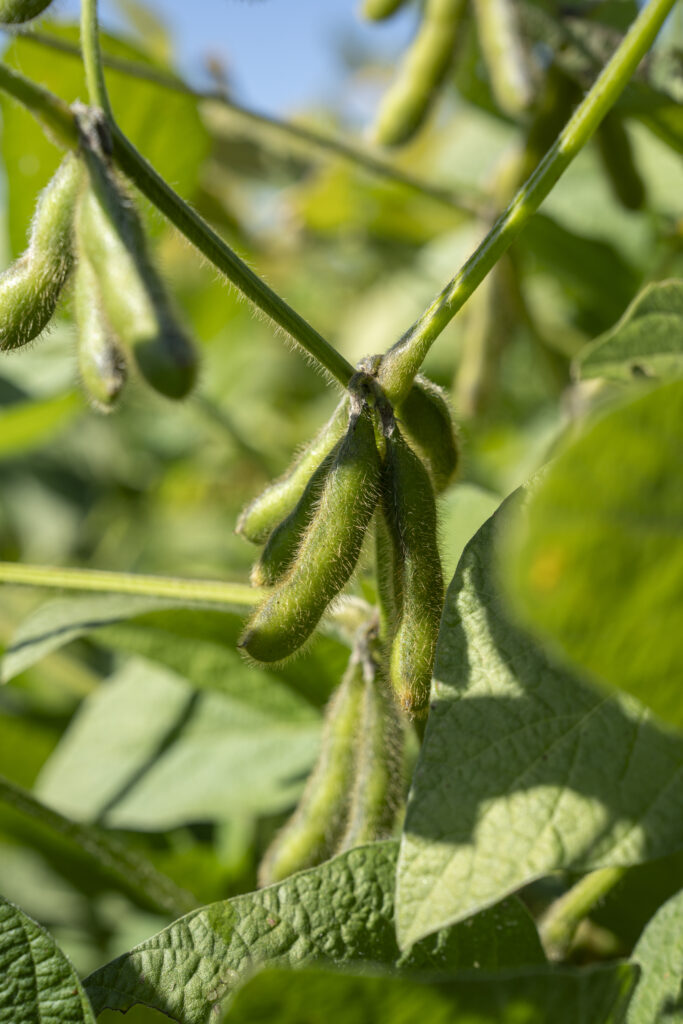
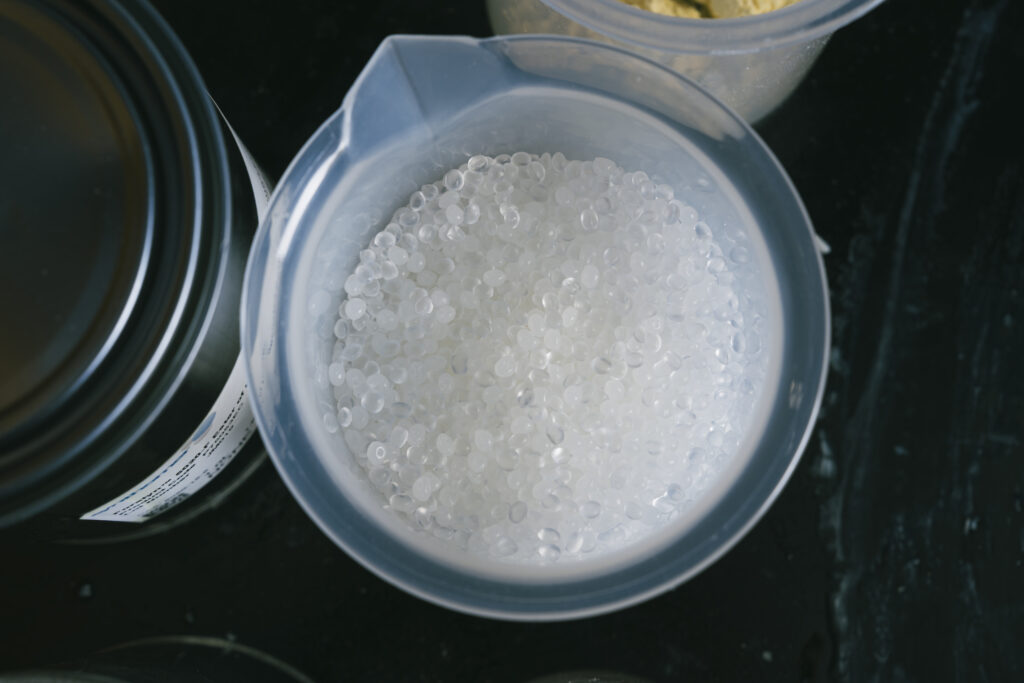
With this strategy, BioBond Adhesives produces industrial adhesives and coatings rendered from corn, soybean and tree nut oils. Used in a range of industries – including packaging, construction, automotive, textile, food processing, veterinary clinics and assisted living facilities – the products are petroleum- and microplastic-free and come without the harsh chemical odors associated with traditional adhesives and coatings.
Launched in September 2023 by the Generational Food Rural Partner Fund (GFRP), BioBond Adhesives complements its low environmental impact with a mission to build economic strength in rural areas and provide jobs to the people who live there. Its headquarters in Westpoint, Ind., supports this mission. “We are about spending money to create a living wage and jobs in rural America,” McConnaughey says of his 15-employee company. “Seventy-five percent of our funding must be spent in a USDA-qualified zip code, which is less than 50,000 people in that zip code.”
As comfortable as McConnaughey is in this environment – “I really enjoy the cornfield,” he says – it’s not typical of his more than 40-year career, which has seen him based everywhere from Southeast Asia to Silicon Valley and from Massachusetts to Munich. His chemical engineering degree got him a role with materials companies before he leapt into the technology world and eventually merged his backgrounds by helping to develop computer-monitor-display technologies (he was involved in developing Apple’s original 9” monitor display). He’s participated in a number of start-ups, helped build billion-dollar companies and guided supply chain development for a variety of products.

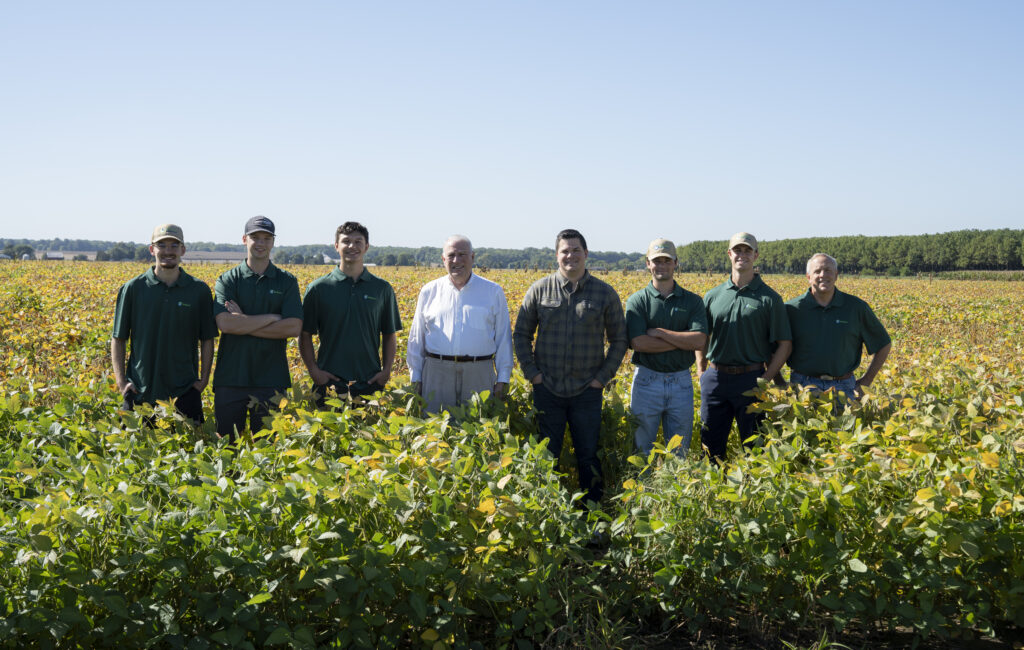
This background drew the attention of the GFRP, which invests in licensing intellectual properties from universities and academics across the nation. In 2022, the investment fund recruited McConnaughey as BioBond Adhesives’ first employee to build on patents from Purdue and Oregon State universities. McConnaughey quickly recruited an old contact, Dr. Richard Hart, as BioBond Adhesives’ chief technology officer, and built a team that includes long-term industry veterans as well as Purdue University interns. BioBond has five rising seniors from Purdue from mechanical engineering to chemistry and supply chain.
Within just more than a year from its launch, the company had filed 20 provisional patents, put products into the marketplace and started generating revenue. In the last few months alone, the company has unveiled a new bio-based adhesive- better than glue for schools, a bio-based adhesive for artificial fingernails and a bio-based hot-melt adhesive for product packaging and mailers.

A unique product in a multi-billion-dollar marketplace
The adhesives and coatings marketplace is massive, with combined annual revenues of some $190 billion, but it’s dominated by big players selling petroleum-based products. BioBond Adhesives is seizing a niche with an environmentally friendly alternative.
With its bio-based coating and adhesive products shipping to a growing customer base across the U.S. and in Mexico, BioBond Adhesives has moved at remarkable speed, a fact that McConnaughey attributes to a few key factors: innovative products, a team that blends deep experience with youthful ambition and solid start-up funding. BioBond Adhesives’ products are manufactured in Texas in collaboration with a contract manufacturer, but the company’s headquarters and wet lab are in Indiana.
Recognizing the right markets has been important, McConnaughey says. As much as 80% of the $72 billion adhesives market is dominated by big players, while the $108 billion coatings market offers a bigger opportunity, as big companies own only about 30% of the market. Seeing “low-hanging fruit” in both categories, BioBond Adhesives has projected that it will post revenues of $3 million for 2026.
BioBond enters this marketplace with distinctive products offering several environmental benefits: Made from plant materials, they’re more sustainable than more common petroleum-based coatings and adhesives as well as microplastic-free, which makes them more biodegradable and better for the environment and people. Five BioBond Adhesives products have been certified by the U.S. Department of Agriculture Biopreferred program, a federal initiative to increase the use of biobased products.
One coating product, BioCoat, offers environmental protection by resisting mold, bacteria and microbial matter growth, features that are being put to use in food processing and distribution plants, assisted living facilities, veterinary applications and more. The company says it’s the world’s first bio-based protective antibacterial coating. McConnaughey particularly likes that many facilities are required by law to use such protective coatings. “I like a market where they have to do something,” he says.
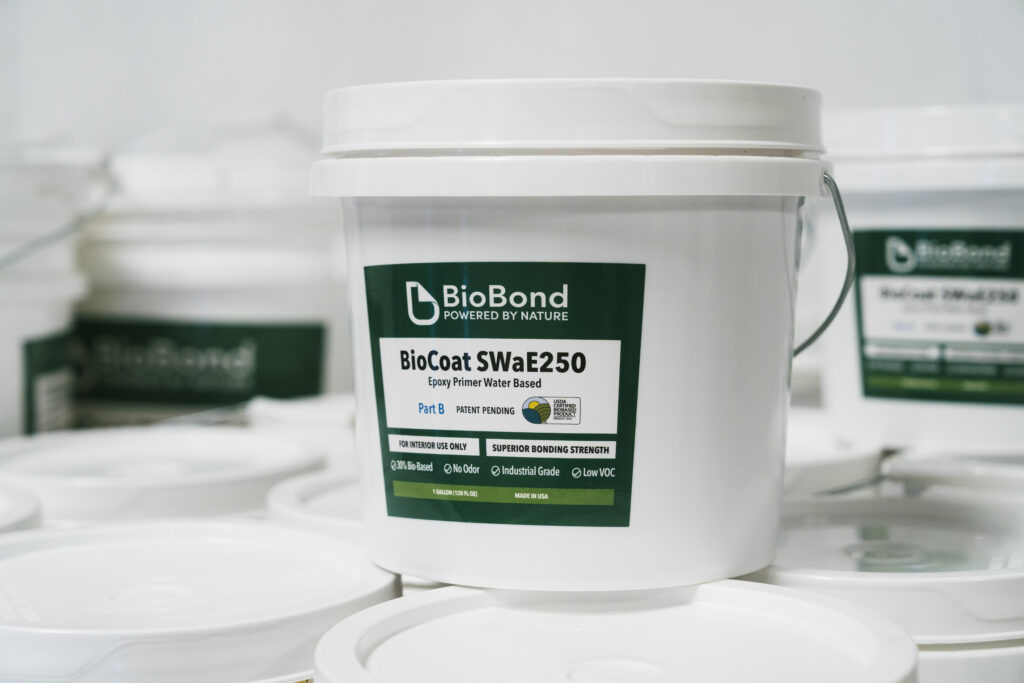
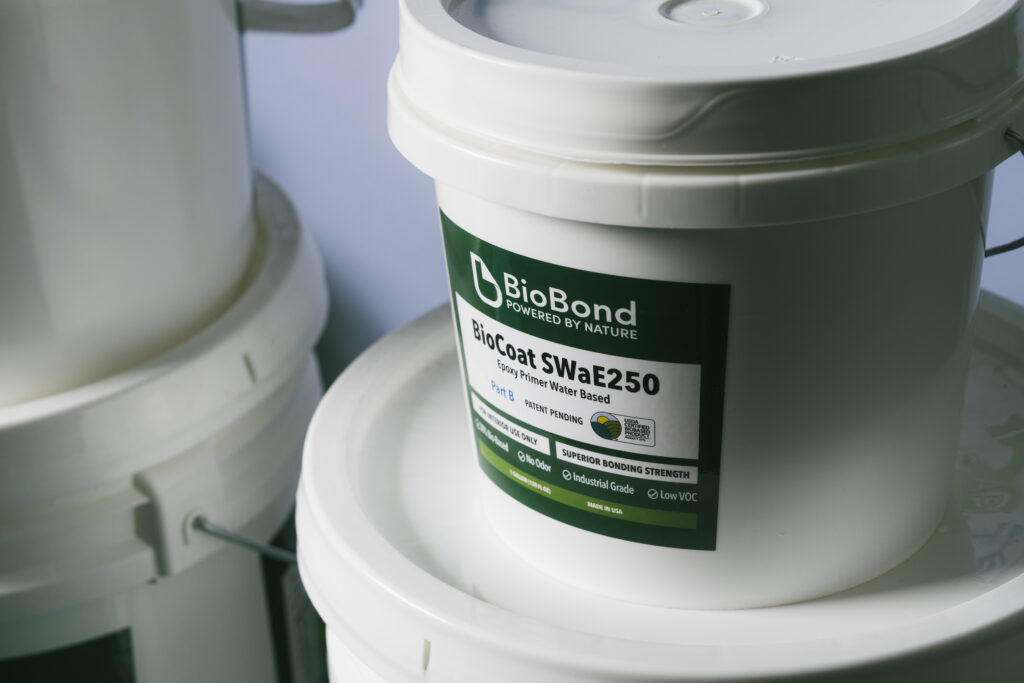
BioCoat comes with an additional benefit: It’s free of the noxious and dangerous fumes common with petroleum-based products. As such, BioBond Adhesives can be applied without special equipment or protective gear and don’t require evacuations during applications. For example, an assisted living facility recently applied the product to its floors without moving residents out of the facility, something it would not have been able to do with more traditional coatings.
These products are based on the intellectual property acquired by GFRP and additional development by the BioBond Adhesives team, which features a mix of industry veterans and new, young talent. Hart, who drove advancements in silicone formulations at General Electric and invented widely used water-based urethane coatings, was integral to accelerating BioBond Adhesives’ product development, McConnaughey says, as was Chief Science Officer Clayton Westerman, who joined BioBond Adhesives directly from the PhD program at Purdue University. Others on the team have experience developing and marketing products for major consumer brands as well as start-ups and spin-offs. With employees working in Indiana, California and Arizona, BioBond Adhesives is marketing worldwide.
Fueling all of this activity has been a pair of investments from GFRP, which is part of Big Idea Ventures, a fund that has invested in more than 100 sustainability-focused companies by licensing university IP and working with professors to execute it into useful products. By committing $6 million to BioBond Adhesives, GFRP relieved its leaders from the need to seek venture capital and focus on product development and market deployment.
“I just focus on building the team and getting to market,” McConnaughy says.
The fast-moving company shows no sign of slowing down. It has products in development that would replace plastic mailers with coated paper as well as meltable adhesives for paper and cardboard packaging. On the strength of its growth and product pipeline, BioBond Adhesives is planning to build an additional 100,000-square-foot facility in Indiana to make specialty hot melts, which is a $9-billion market.

Key Learnings: People and experience (and a few mistakes) make the difference
Start-ups can live and die based on funding, but they can thrive and survive with the right people, veteran experience and lessons learned from past mistakes.
While BioBond Adhesives is a relative newcomer, its quick marketplace traction grew from years and years of experience. Here are eight lessons that have contributed to the company’s rapid growth.
Find the right people. One of McConnaughey’s first moves after taking the CEO job was to reach out to Richard Hart, who not only brought technical knowledge and experience to the table but also a solid network of industry contacts that helped to speed product development. Of course, GFRP set the tone for hiring the right people when it tapped McConnaughey to lead the company before there was a company.
Find a promising product that needs commercialization. Universities tend to have great intellectual property and engineering but not a good structure for commercialization, McConnaughy says. Create a partnership that lets academics do what they do best and you do what you do best and you’ll likely hit the ground running.
Offer a great product at a good price. Don’t think you can charge more for a product simply because it fits into a unique category, such as bio-based adhesives and coatings. Quality and price rule the day, all day.
Timing matters. One ofMcConnaughey’s early start-ups failed because it burned through money trying to solve problems before the technology to address those problems existed. “You could be the brightest person in the room, you can get all the money in the world and do the moon shot,” he says. “But if the timing’s wrong, it’s just not going to work out.”
Learn from your mistakes. McConnaughey is quick to concede that one key to BioBond Adhesives’ fast start is the fact that past stumbles allowed him to avoid pitfalls that might have slowed things down. “It’s from four other startups in which I made all the mistakes,” he says.
Speed matters. Working in Asia, McConnaughey saw a corporate culture that valued speed to market above all else. “They move at lightning speed,” he says. “Go to market and get to revenue fast.” That mindset is what drove his team to find “low-hanging fruit” and push to develop products that could reap the harvest in a hurry.
Survive the “Valley of Death.” Too many start-ups fail when they don’t have the resources to survive while they’re moving a new product into the marketplace. “They build a prototype, get ready to enter the market and sell, but they don’t have the funding to get market traction,” McConnaughey says. This creates a conundrum because a lot of capital sources won’t fund an entity that doesn’t have market traction. Start-ups end up playing a chicken-and-egg game. And they usually lose. “You know, everybody seems to be proud that 97% of all start-ups fail,” McConnaughy says. “I think that’s a horrible track record … That’s not going to rebuild middle-class America.”
Be a truth seeker. Someone at Apple Computer once gave McConnaughey a t-shirt that said, “I’m a truth seeker.” The message stuck with him. “Everybody has an opinion,” he says. “But how do you get to the real hard, cold steel of how you can really execute at high levels?”
“If we cannot be less than the lowest price in the market, we don’t do the product. And if we’re not performing as well as the best product, we don’t do it.”
Marc McConnaughey
CEO, BioBond Adhesives