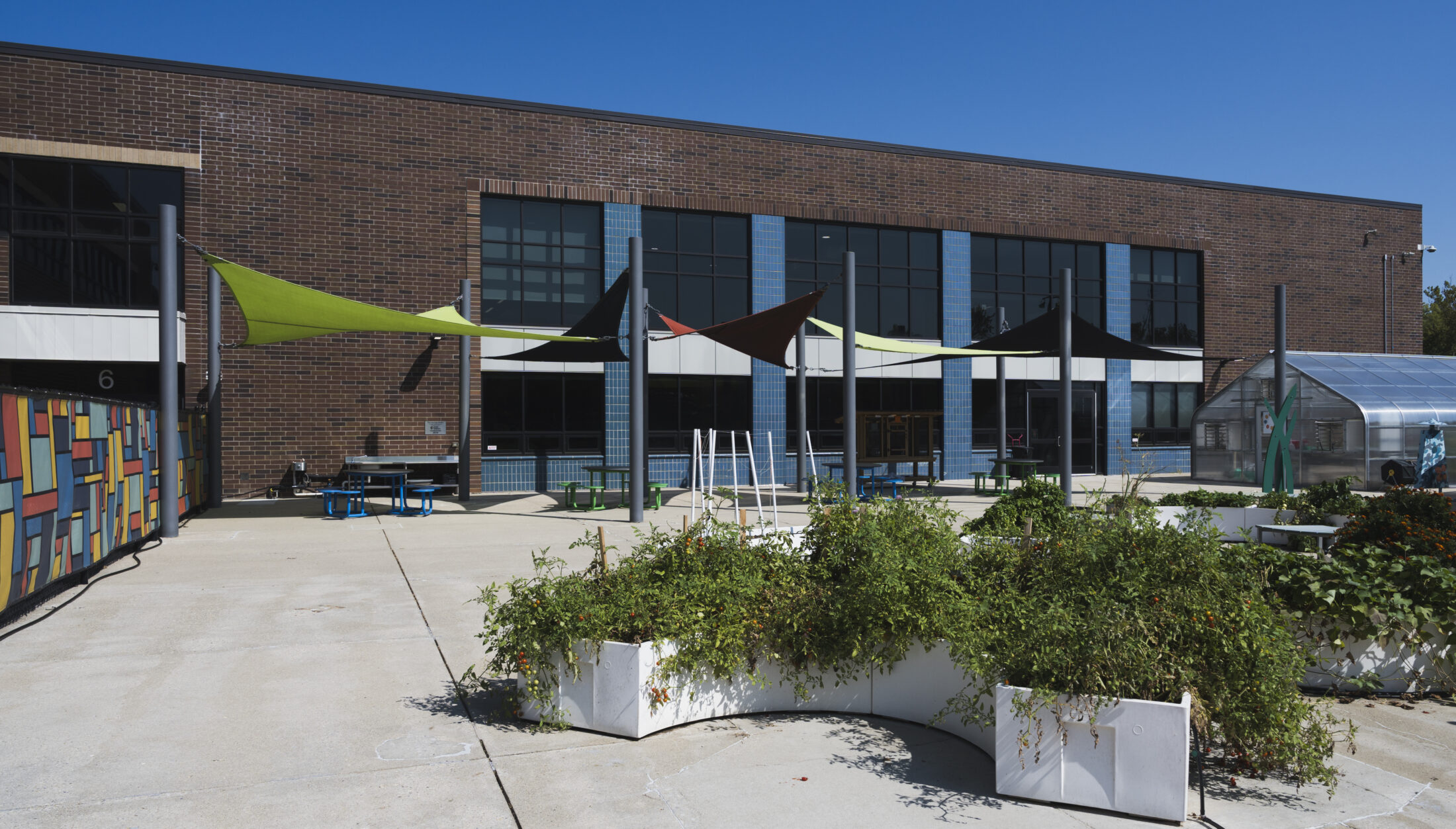
Plainfield space prepares kids for careers that aren’t even invented yet by teaching them the joy of learning
Background
Every month, 2,500 Plainfield Community School Corporation grade schoolers rotate through a space where they probably forget they’re in school. The Imagination Lab exposes the children to science, math, the arts and humanities through high-energy, hands-on “Odysseys” that seek to inspire lifelong learning and begin preparing them for careers they can’t even imagine.
What do you do with a natatorium that’s no longer needed? If you’re Plainfield Community School Corporation, you use your imagination, turning it into a unique learning space that prepares students for an undefined future.
Built as part of Plainfield’s first middle school in 1989, the natatorium served both the school system’s middle school aquatics program and swimmers from the Town of Plainfield Parks and Recreation Department for a quarter of a century before both entities found other homes. In 2018, after considering a variety of uses, the school district replaced the pool at Clarks Creek Elementary with The Imagination Lab.
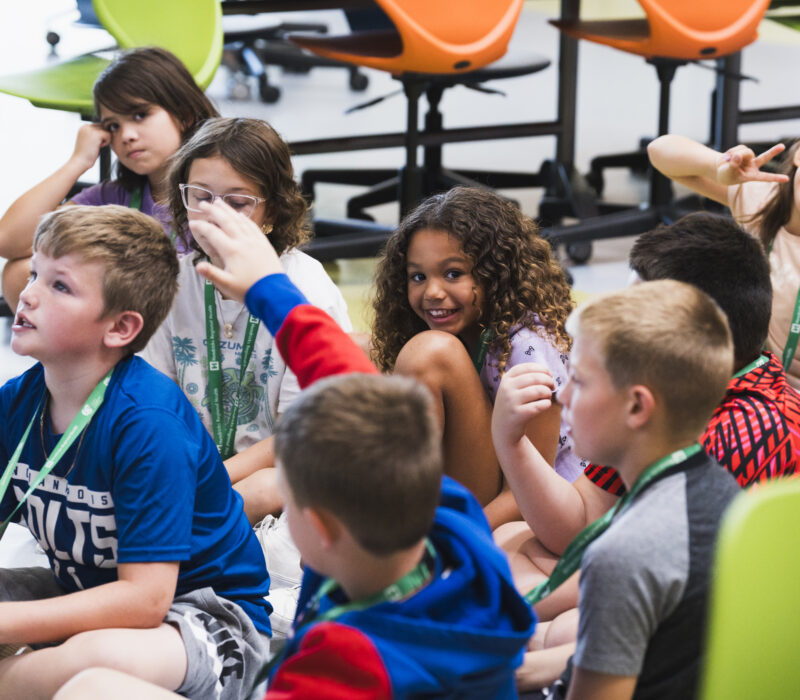
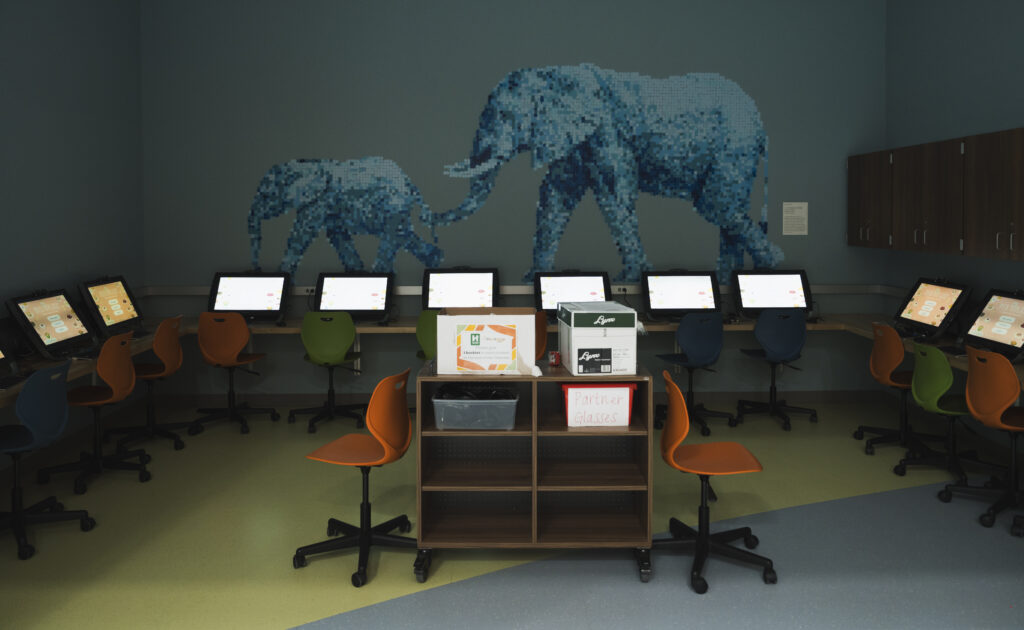
Today the former natatorium is a bright and open space inviting Plainfield Community School Corporation’s 2,500 elementary school students to dive in to hands-on learning experiences. Each child makes a 90-minute visit – or “Odyssey – to the Lab with their class nine times in the course of the school year. Once in the space, the kids split into groups that rotate through the Lab for a series of activities that employ both hands-on projects and digital experiences.
Challenges and Solutions
As the competition for workers has heated up, employers and their industries have sought to reach future workforces earlier and earlier. The problem is, many of the children in school today will work in careers that haven’t been invented yet, and schools are still adapting to a generation for whom traditional classroom learning is not effective. The Imagination Lab seeks to counter these challenges with a focus on the joy of learning new things.
In the ongoing scramble for workers, you could say the schools and industry are turning to an old saying for guidance: The early bird gets the worm. Virtually every industry has launched efforts to connect with future workers at a younger and younger age, and schools are onboard, seeking to help students explore different career options, learn what they need to do to get the jobs they want and prepare for their futures as workers.
However, there is one big problem looming over this approach: If recent history is any guide, that early exposure has to help prepare today’s kids for jobs that haven’t even been invented yet.
Plainfield Community School Corporation is addressing these challenges with The Imagination Lab, which engages kids in kindergarten through fifth grade with hands-on experiences that expose them to STEM subjects as well as skills they likely will need in the workplace of the future.

Rather than looking at any specific careers, though, The Imagination Lab builds on the State of Indiana’s employability standards, the basic skillsets employers expect of people who apply for their jobs, says The Imagination Lab Director Tracy Ballinger. The goal is to teach the foundational skills that are useful for any career and that can help anyone succeed in any role.
But this isn’t a sit-in-your-seat-and-absorb-knowledge program. On the contrary: The Imagination Lab uses hands-on activities, digital tools and other creative approaches to emphasize the joy of learning new things, fostering in kids a willingness to gather knowledge and an eagerness that will serve them in any career. Engaging a self-directed generation raised on devices, the process is organic, active and upbeat.
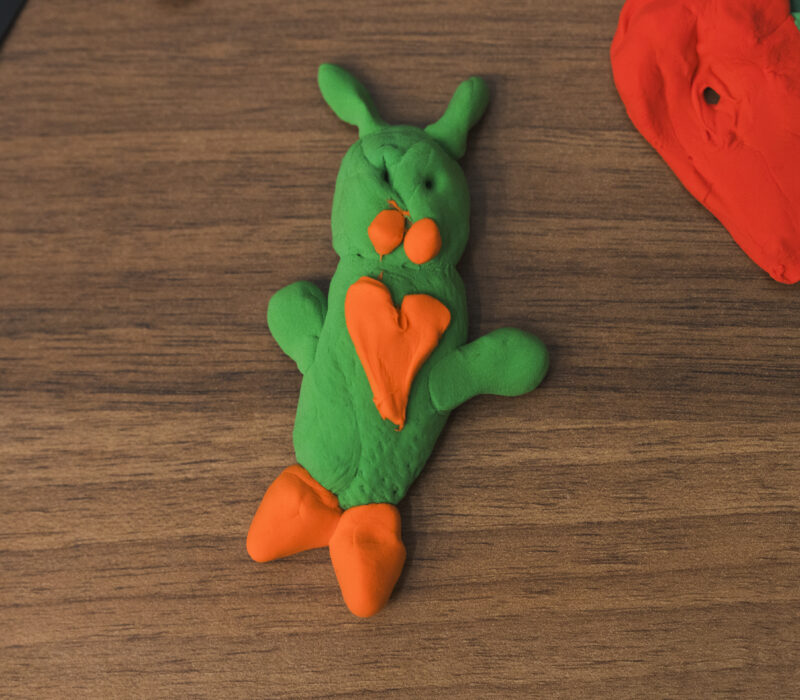
The activities offered to kids cover a broad spectrum. They might be in groups reading a story, or they might be using digital devices to control a model train. They might be building a birdhouse or programming a 3D printer. They might be mixing liquids in beakers, planting seeds, donning VR goggles or painting pictures. Regardless, they’re almost always smiling and learning to work together. Ballinger acknowledges that The Imagination Lab approaches initially failed to connect with some teachers, who had to step outside of their usual classroom techniques when they brought their kids to the Lab’s unstructured environment. But by engaging the teachers in the activities, she’s found that they soon recognize the program’s effectiveness and become some of its biggest champions. “We’ve had teachers buy into that more and more and just come into the space and enjoy learning alongside their students,” she says.
Key Learnings and Outcomes
From its first days, The Imagination Lab has lived one of its key maxims: Failure is part of the program. “It’s been trial and error,” Ballinger says. “We talk a lot about the importance of failure and making sure you are learning from those opportunities.”
From its first days, The Imagination Lab has lived one of its key maxims: Failure is part of the program. “It’s been trial and error,” Ballinger says. “We talk a lot about the importance of failure and making sure you are learning from those opportunities.”
For example, while the program sought to be easy-going and organic, the operators quickly learned that the large, open space lends itself to a certain level of chaos. So they had to complement their fun vibe with clear procedures for how students would move through the space and the activities, and they had to be very intentional about planning every moment so kids could focus on learning. The logistics of transporting the kids from the various Plainfield grade schools to The Imagination Lab and back has at times been challenging, but the school system has seen enough positive response to the program to make the extra effort needed to ensure the kids get there.
Volunteers have been an essential component of The Learning Lab, Ballinger says. She has more than 100 that have agreed to come in and spend time with the kids, complementing the work of the Lab’s two-person staff and teachers. In addition, local businesses have partnered with the Lab to offer subject matter expertise and resources.
As she waits to see if this emerging generation of workers arrive in the workplace with the skills they need to succeed, Ballinger points to a few tangible experiences as evidence that The Imagination Lab is a success. For one thing, teachers have mentioned that some of the students who shine the brightest in the Lab are the ones who don’t do particularly well in the classroom, and some students who seem uncertain of themselves gain confidence during their Odysseys.
But Ballinger doesn’t rely on those anecdotal notes alone. She surveys kids after their Lab experiences. “I’m asking them, ‘What’s the best thing at The Imagination Lab?’ When you tally all of the results, the number one answer is ‘Everything,’” she says. “And when you ask, ‘What’s the worst thing?’ the number one answer is ‘Nothing.’”
“The careers we’re trying to get these kids ready for, they might not even exist yet. So, we’re trying to get the students to see that there is joy in learning new things and that there is confidence that can come just from that opportunity.“
Tracy Ballinger
Director, Imagination Lab